

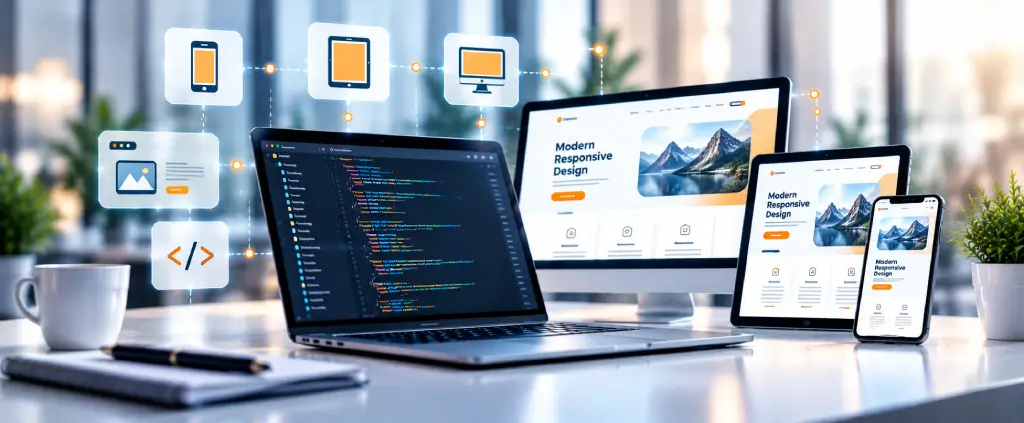
Overview
Designing seamless digital experiences that work beautifully across all mobile devices. At Moltech Solutions Inc., we create custom digital solutions that align with your unique processes, improve efficiency, and support your long-term business goals.
Mobile-First Design
Most consumers, of course, see your website from their phone rather than from a PC. We thus develop with a mobile-first strategy, building for the smallest screen first and then scaling back. Rather than forcing a desktop layout into a phone, we consider how information, navigation, and user flow should function given constrained space.
This method enables us to produce more concentrated experiences faster and cleaner ones as well. We focus especially on topics like button tap regions, thumb-friendly menus, adjustable grids, and content prioritization. For instance, we turned their whole layout strategy to mobile-first when we helped revamp a health services site, and within the first month, we experienced a 2x increase in appointment reservations from mobile users.
It goes beyond merely "shrinking things down." It's about considering how your consumers connect with your brand when on the run. We will help you intentionally fix your mobile experience if it seems clumsy, antiquated, or difficult to use.
AMP (Accelerated Mobile Pages)
Sometimes, even a three-second delay on mobile is enough to lose a potential customer. That’s where AMP (Accelerated Mobile Pages) makes a real difference. We help you build or convert content-heavy pages into lightning-fast, stripped-down versions that load almost instantly on mobile devices even on slower connections.
AMP is ideal for blogs, landing pages, news portals, and anywhere mobile speed really matters. It removes the bloat, simplifies scripts, and focuses on clean HTML, CSS, and caching techniques that dramatically improve load times and Google performance. For one content-based business, switching their articles to AMP helped reduce bounce rates by 35% and increased average mobile session duration.
AMP doesn’t mean your site has to look boring. We keep it lightweight without compromising design or brand identity. It’s all about speed, simplicity, and serving your users what they came for without the wait.
Cross-Device Testing
Just because a site looks great on your laptop doesn’t mean it works well on your customer’s Android phone or that budget tablet from three years ago. That’s why we do real cross-device testing, not just resize a browser window and call it a day.
We manually test your website or web app across multiple screen sizes, operating systems, and real-world devices. iPhones, Samsung phones, iPads, older Androids, Windows laptops you name it. We check layout consistency, font rendering, form behavior, scroll performance, and tap accuracy.
One client came to us after realizing their checkout button was unclickable on a specific browser version and they had no idea. After we implemented cross-device QA, we uncovered several small (but important) issues that were frustrating users and costing conversions.
Automated tools help, but nothing beats eyes-on-device testing. We test how real users use your site so you can deliver a great experience no matter where they land.
 USA
USA Singapore
 Switzerland
 India
India