
ERP Integration ROI: Build a Defensible Business Case
Creating Finance-Approved Connected Operations Investment Cases

Learn how to build a defensible ERP integration ROI business case with traceable benefits, full lifecycle costs, and risk modeling. This guide covers scoping workflows, establishing Finance-approved baselines, classifying benefits without double-counting, stress-testing assumptions, and validating r

Sep 25th, 2026

Moltech solution inc

Define Investment Scope Before Estimating Returns

Document decision boundaries, systems, interfaces, volumes, and exclusions with an accountable executive sponsor. Proceed only when you can name first-wave interfaces and freeze the business-as-usual baseline.

Calculate ROI Without Double-Counting Benefits

Classify each benefit once across hard savings, avoided costs, released capacity, revenue protection, and working capital. Enforce exclusion rules and let Finance validate each line item.

Validate Results Through 30/60/90-Day Evidence Gates

Measure interface availability, adoption, unit economics, and early lagging outcomes. Publish scorecards with decision gates to continue, fix, or pause based on real data.

Table of Contents

Reading Progress0%

Quick Actions

Get in Touch

Have a question or need help?
We're here for you.

I'm not a robot

Don’t Fund ERP Integration on Savings Assumptions You Can’t Defend

ERP integration ROI often looks attractive until labour savings, avoided errors, working-capital gains, implementation effort, support costs, and dependency risk are challenged. Moltech Solutions helps turn the first wave into a finance-ready business case with a clear baseline, scoped benefits, lifecycle costs, ownership, assumptions, sensitivity checks, and evidence gates before larger funding is committed.

Baseline Costs Before Benefits
Model Lifecycle Costs Honestly
Can Your ERP Integration ROI Survive a CFO Review?

Moltech Solutions can pressure-test first-wave scope, current-state costs, benefit assumptions, integration effort, internal ownership, support, risk, payback, and evidence gates. Turn an optimistic ROI estimate into a finance-ready case leaders can fund, challenge, and measure after go-live.

Let's Connect
Frequently Asked Questions

Do you have Questions for ERP Integration ROI: Build a Defensible Business Case ?

Let's connect and discuss your project. We're here to help bring your vision to life!
ERP integration ROI represents the incremental, attributable value gained by connecting workflows like order ingest and ship confirm, minus the full lifecycle costs of building, running, and governing those interfaces. It requires a documented baseline, traceable processes, accountable owners, and Finance validation to create a defensible business case.
Defining scope ensures clarity on which workflows, systems, interfaces, volumes, and exclusions are funded. It sets boundaries to prevent counting unrelated benefits, identifies the accountable executive sponsor, and provides a baseline to measure incremental ROI accurately.
A baseline captures today's friction such as manual data re-entry, reconciliation hours, correction loops, aged exceptions, expedite requests, and premium freight. It relies on transaction-level data reconciled across ERP, CRM, WMS, TMS, and finance systems, with clear ownership and frozen rules to serve as a control group.
Benefits are classified into hard savings (cash outflows reduced), avoided costs (deferred spend), released capacity (time freed without immediate cash impact), revenue protection (preserved margins), working capital effects (cash released via lower inventory or receivables), and qualitative value (risk or compliance improvements without direct dollar claims).
By ensuring each benefit dollar traces to a single named workflow, owner, validation method, and financial treatment. Exclusion rules prevent overlapping claims, especially for manual touches or exceptions, and Finance involvement validates classifications before benefits are added to the model.
Include one-time build costs (discovery, design, testing, training), transition and hypercare (go-live support, triage, defect burn-down), and ongoing steady-state operations (monitoring, upgrades, incident handling, support). Also factor in risks like data quality, user adoption, interface reliability, and security governance.
Stress-testing uses scenarios with variables like volumes, adoption, manual workaround rates, unit improvements, and cost variances to ensure the business case holds under conservative conditions. It identifies break-even points for adoption, cost overruns, benefit delays, and savings conversion thresholds to guide sound investment decisions.
Day 30 measures leading signals like interface availability, latency, errors, and adoption. Day 60 focuses on work changes such as reduced manual re-entry and cycle-time improvements. Day 90 checks early lagging outcomes including premium freight, invoice disputes, and inventory shifts. All tie back to named owners, workflows, and Finance validation.
By prioritizing interfaces based on decision value, baseline friction, evidence quality, and readiness. Documenting all interfaces with source/target systems, business events, error handling, owners, benefit mechanisms, and validation methods. Establishing fast, auditable approval rights across Operations, IT, Finance, Security, and Procurement, plus defining acceptance criteria for measurement and gating.
Traceability of every claimed dollar to named workflows, business events, and owners; a frozen, Finance-approved baseline; a full cost profile including operational risks; strict exclusion rules; evidence gates at 30/60/90 days; and joint governance with designated owners and validation methods ensure defensibility and credibility.
Finance defines how benefits convert to hard savings or working capital effects, ensures no double-counting, validates baselines and classifications, confirms cash impact, and signs off on realized outcomes rather than modeled projections. This alignment controls risks and strengthens the connected operations business case.
Qualitative benefits should be documented and visible as decision factors but not monetized unless a direct, measurable cash impact can be proven and validated. Keeping qualitative value separate from financial ROI maintains clarity and prevents inflating expected savings.

Ready to Build Something Amazing?

Let's discuss your project and create a custom web application that drives your business forward. Get started with a free consultation today.

Call us: +1-945-209-7691
Email: inquiry@mol-tech.us
2000 N Central Expressway, Suite 220, Plano, TX 75074, United States

More Articles

Native vs Cross-Platform Development Expert Software Services Guide for 2025 Mobile App ROI and Performance by Moltech Solutions
Nov 10th, 2025
8 min read

Native vs Cross-Platform Development: Expert Software Services Guide

Compare native vs cross-platform development for 2025. Expert software services help decision-makers choose the best pat...

Moltech Solutions Inc.
Know More
Node.js Performance Optimization Custom Software & IT Consulting for High-Performance, Scalable Applications by Moltech Solutions
Nov 8th, 2025
8 min read

Node.js Performance Optimization: Expert Software Services for Speed & Scalability

Improve Node.js speed and scalability with expert performance optimization. Custom development, IT consulting, and digit...

Moltech Solutions Inc.
Know More
Angular vs Vue in 2025 Framework Comparison & Expert Software Development Insights by Moltech Solutions
Nov 6th, 2025
10 min read

Angular vs Vue in 2025: Expert Software Services & Development Guide

Explore Angular vs Vue in 2025 to choose the right framework for scalable, maintainable software projects with expert IT...

Moltech Solutions Inc.
Know More
Mobile App Architecture Expert Software Services for Scalable, Secure, and High-Performance Apps by Moltech Solutions
Nov 4nd, 2025
9 min read

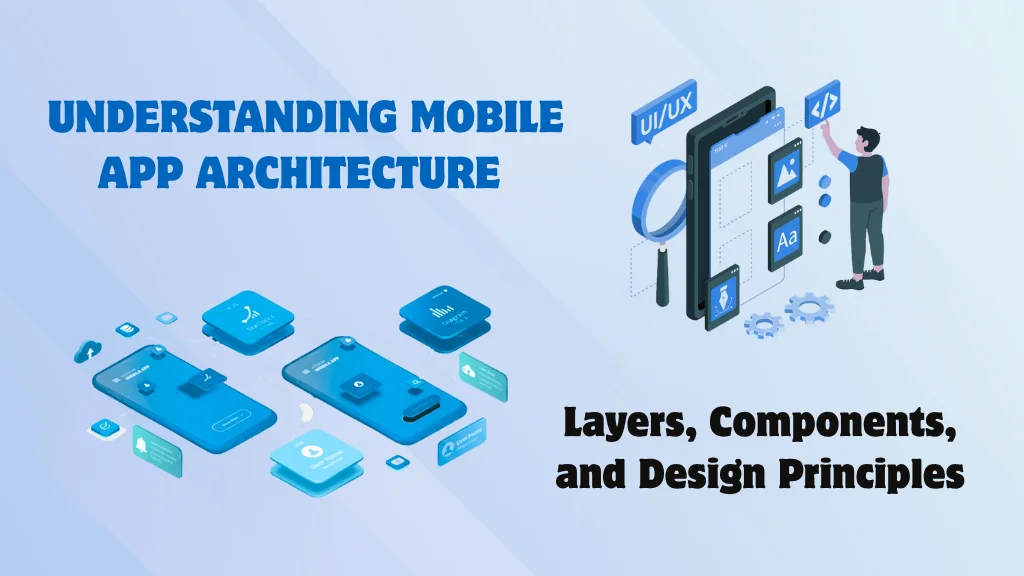
Mobile App Architecture: Expert Software Services for Scalable Apps

Explore mobile app architecture essentials and expert software services. Build scalable, secure apps with custom develop...

Moltech Solutions Inc.
Know More
In-House IT vs Managed Services Expert Managed IT Consulting for Scalable Growth by Moltech Solutions
Nov 2nd, 2025
9 min read

In-House IT vs Managed Services: Managed IT Consulting for Growth

Discover how to choose between in-house IT and managed services with expert IT consulting for scalable software, AI, and...

Moltech Solutions Inc.
Know More
The Landscape of No-Code Tools Popular, Affordable & Open-Source Options by Moltech Solutions
Oct 31st, 2025
8 min read

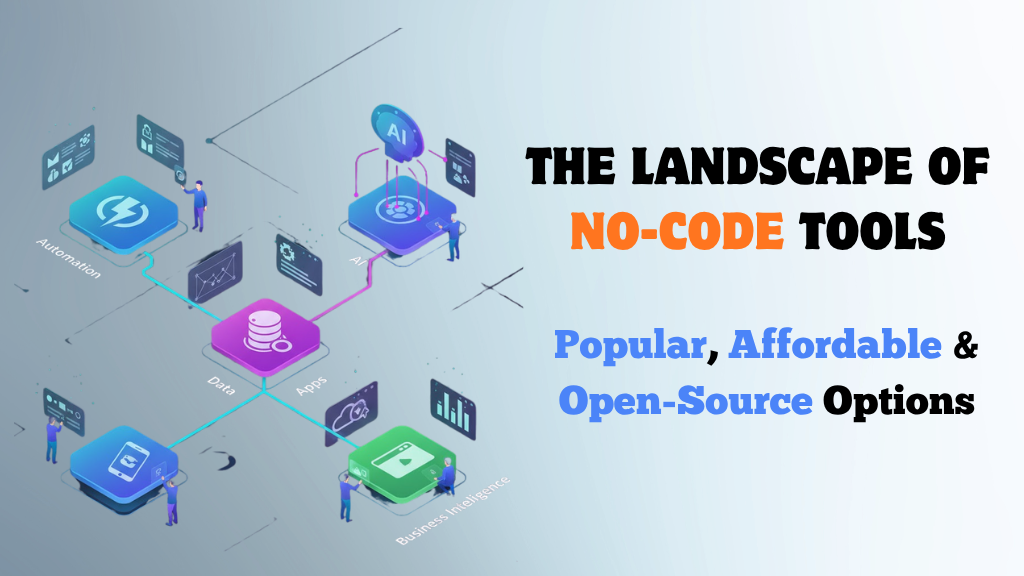
No-Code Tools Guide: Affordable Solutions & Software Services

Explore popular no-code tools for startups & enterprises. Expert software services in custom development, AI, and digita...

Moltech Solutions Inc.
Know More