




If you're gearing up for your next mobile launch, you're probably grappling with the familiar dilemma: Progressive Web Apps or Native Apps? Come 2026, this isn't just a matter of dollars and cents versus quality. Browsers have come a long way, installable web apps are now widely accepted, and privacy laws have changed the game for distribution and analytics. Meanwhile, native mobile apps still hold the edge when it comes to raw performance and how deeply they integrate with a device. This article helps you choose with confidence. We’ll explain PWAs and native apps in clear, practical terms; compare them across cost, performance, reach, maintenance, and time-to-market; and dispel common myths. You’ll also get a decision framework tied to real business goals speed, budget, user experience, and offline requirements along with sector-specific guidance for ecommerce, SaaS, fintech, and media. We’ll close with a forward-looking view of where web and native platforms are headed in 2026.
What Are PWAs and Native Apps Really?
Before you compare performance, cost, or scalability, you need clarity on what these two options actually are. Many businesses make decisions based on assumptions. Let’s simplify it in a practical way. A Progressive Web App (PWA) is a website that behaves like a mobile app. Your users access it through a web browser, but it doesn’t feel like a traditional website. They can install it directly from a URL onto their home screen. It can work offline using a background process called a service worker. It can send push notifications and sync data once the internet connection returns. PWAs are constructed using web technologies like HTML, CSS, and JavaScript, along with the latest browser APIs. The real advantage, from a business standpoint, is straightforward: you develop it a single time, and the same application can work across multiple platforms. This means no more juggling separate Android and iOS versions. When an update is ready, users receive it immediately the next time they launch the app. No more waiting on app store approvals.
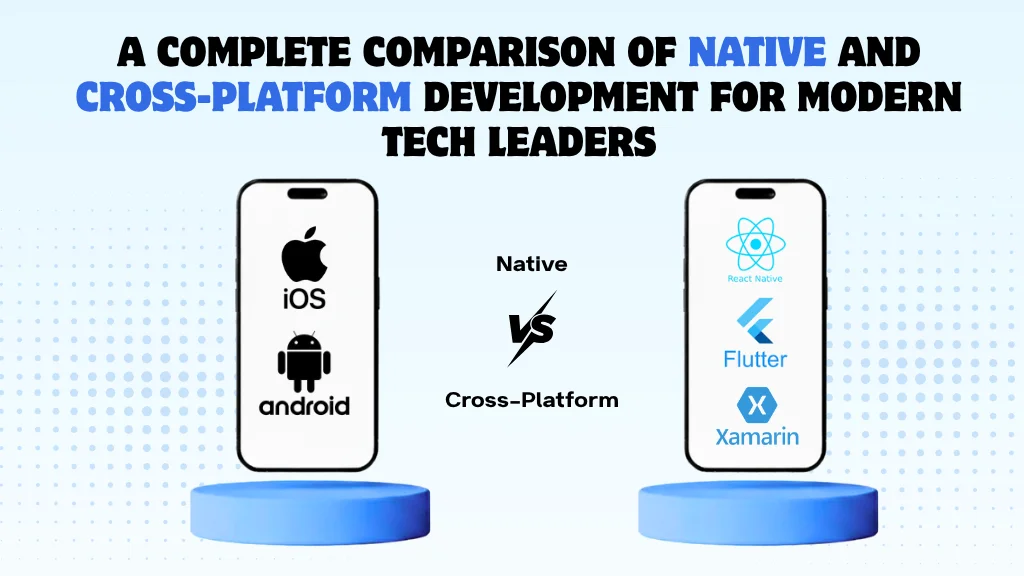
Native mobile applications are built specifically for an operating system and optimized around the capabilities and standards of that platform. iOS apps are developed using Swift or Objective-C. Android apps use Kotlin or Java. Some companies use frameworks like Flutter or React Native to streamline development, but the final result is still compiled into platform-specific native code. Native applications find their way to users via app stores like the Apple App Store and Google Play. Once installed, these applications have deeper access to native device capabilities and operating-system features, including the camera, GPS, Bluetooth, biometric authentication, and advanced graphics. This includes the camera, GPS, Bluetooth, biometric authentication, and the ability to utilize advanced graphics and deeper operating system functions. As a result, high-performance applications, gaming platforms, and complex enterprise solutions often rely on native development. If you want a simple mental model, think of it this way. A PWA is one codebase delivered through the browser, installable from the web, and updated instantly. A native app is a platform-specific application distributed through app stores, offering deeper system integration and often requiring more development effort. Neither option is automatically better. The right choice depends on what your business truly needs speed to market, deep device integration, cost efficiency, or long-term scalability. Understanding this difference is the foundation for making the right decision.
A PWA can also use an app shell architecture to cache the core interface and essential resources, helping the application load quickly and provide a more consistent experience during repeat visits or limited connectivity.
Progressive Web Apps vs Native Apps: The 2026 Comparison
Instead of debating which approach is “better,” let’s compare what actually matters to your roadmap, budget, and long-term growth. The table below breaks down the real-world trade-offs businesses evaluate in 2026.
| Decision Area | Progressive Web Apps (PWA) | Native Apps |
|---|---|---|
| Cost & Time-to-Market | Typically 50–70% lower cost. One codebase for mobile/desktop. Instant updates bypass app store approvals. | Higher upfront cost for separate iOS/Android versions. App store reviews and platform tuning add complexity. |
| Reach & Discoverability | SEO-friendly and indexable by Google. Sharable via links. Ideal for content and social traffic. | Distributed via app stores. Requires strong App Store Optimization (ASO) and paid acquisition to stand out. |
| Performance & Capabilities | Strong for ecommerce and dashboards. Uses Web Assembly/Web GPU. Supports biometrics and Bluetooth in modern browsers. | Leads in raw performance for gaming and AR. Deeper integration with low-level OS services and background tasks. |
| Offline & Reliability | Uses service workers for offline-first architecture. Lightweight (often only a few megabytes). | Mature OS-level APIs for robust offline use. Larger binaries but highly optimized for system reliability. |
| Privacy & Platform Rules | Avoids 15–30% app store commissions. Operates within browser privacy frameworks and first-party data. | Subject to Apple/Google privacy policies (ATT/Privacy Sandbox). High commissions on digital goods. |
What This Comparison Actually Suggests?
If you're someone who enjoys quick tests, wants to grow your audience using SEO, needs to keep initial expenses low, and appreciates the ability to adapt quickly, a Progressive Web App (PWA) is a strong and practical choice. When apps require top-tier graphics, intricate hardware integration, sophisticated augmented reality features, or intensive background processing, native development still offers benefits that can be difficult to match in a web-based environment. In 2026, the decision is less about technology ideology and more about business alignment. The right choice depends on how your users discover you, how frequently you plan to ship updates, how deeply you need to integrate with device hardware, and how sensitive your model is to platform fees. Understanding these trade-offs clearly allows you to build not just an app but the right growth engine for your business.
Common Myths You Can Drop in 2026
When businesses evaluate PWAs and native apps, the conversation is often influenced by outdated assumptions. The technology landscape has evolved significantly. Let’s clear up some common myths that no longer hold true in 2026.
My PWA can’t be installed.
This used to be a common misunderstanding. Today, a properly configured PWA can absolutely be installed on both Android and iOS devices. When your app includes a valid web app manifest and service worker, browsers allow users to add it directly to their home screen. The difference is not capability—it’s the installation flow. PWAs are installed through the browser rather than through an app store. On desktop devices, installation is often just a single click from the address bar. For many business applications, this lighter installation model actually reduces friction instead of increasing it.
PWAs can’t send push notifications, especially on iOS.
This myth persisted for years, but it’s no longer accurate. Modern iOS versions now support web push notifications for PWAs, provided the user grants permission. Android has supported this for a long time. The user experience and policy controls differ slightly from native apps, but the functionality itself is real and production-ready. For ecommerce platforms, booking systems, reminders, and engagement campaigns, PWAs can now reliably support push messaging across major platforms.
Native is always better.
Native apps certainly offer advantages in specific edge cases such as graphics-intensive gaming, advanced AR experiences, or ultra-low-level hardware integration. But for most business use cases commerce platforms, media delivery, content publishing, internal tools, and productivity apps a well-built PWA is virtually indistinguishable from native from the user’s perspective. In fact, many users won’t even realize they are using a PWA. Meanwhile, businesses benefit from lower development costs, faster iteration cycles, and simplified maintenance. “Always better” depends entirely on what you’re building.
PWAs are insecure.
Security is not determined by whether an application is web-based or native. It’s determined by how it’s engineered. PWAs require HTTPS, which means encrypted communication by default. They run within modern browser sandboxes that isolate processes and enforce strict security policies. When combined with proper authentication, secure APIs, and zero-trust architecture, PWAs can be just as secure as native apps. In reality, poor security practices can make either approach vulnerable. Strong engineering discipline not the app label defines your security posture.
How to Choose: A Decision Framework for Product Leaders ?
The PWA vs native decision should never be emotional or technology-driven. It should be anchored in business goals, timelines, budget realities, and growth strategy. The table below helps product leaders and founders align the decision with what actually matters.
| Decision Factor | When a PWA Makes More Sense | When Native Makes More Sense |
|---|---|---|
| Time-to-Value | Fastest launch (under 12 weeks). One codebase and no app store review delays. | Timeline flexibility exists; priority is platform-specific polish and "feel." |
| Budget Constraints | Reduces initial dev and maintenance costs by 50–70%. | Budget allows for long-term investment in premium, platform-optimized builds. |
| Performance & UX | Great for RPA dashboards, ecommerce, and SaaS using Wasm for heavy compute. | Essential for AAA gaming, intensive AR/VR, or ultra-low latency workflows. |
| Acquisition & Reach | SEO-driven. Users find you via Google and direct links (no download friction). | Discovery is centered on App Store ratings, rankings, and curated marketplaces. |
| Offline & Reliability | Handles light offline usage (browsing, queuing tasks) via Service Workers. | Robust offline-first needs (large local datasets, background sync). |
| Monetization | Full control over payments; avoids the 15–30% "App Store tax." | Business model relies on In-App Purchases (IAP) and subscription frameworks. |
| Compliance & Security | Uses WebAuthn and HTTPS; ideal for most secure business apps. | Requires hardware-backed keystores or deep system-level device attestation. |
Conclusion
Progressive Web Apps deliver speed, reach, and lower total cost of ownership. Native mobile apps deliver unmatched performance, deep integrations, and a trusted presence in app stores. You don’t have to pick a side you need the right first step and a roadmap that reflects your business reality. Start with the model that gets you to product-market fit fastest. Add capabilities where customers and revenue demand them. And design your stack to flex as browsers, operating systems, and privacy rules continue to evolve.