




If your growth plan depends on building or buying software, 2026 will be a make-or-break year. Market signals are clear and consistent: software budgets continue to rise, AI is moving decisively from pilot to production, and cloud-native architectures are no longer optional they are table stakes. But the winners won’t be the teams chasing every shiny new technology. They will be the organizations that translate trends into measurable business outcomes faster delivery, lower unit costs, stronger security, and predictable ROI. This guide breaks down 20 Software Development Trends for 2026, pairing current statistics with practical, execution-ready moves you can take over the next 12–24 months. Expect concise explanations, real-world mini use cases, and decision checklists designed to help CTOs, CIOs, product leaders, and IT decision-makers align strategy, architecture, and investment without the hype.
How to Use Software Development Trends 2026 for Better Decisions?
Trends are useful but only if you treat them as signals, not instructions. In practice, they help you answer three very real questions leaders face every year: what should we push harder on, what should we lock down, and what’s worth keeping an eye on without betting the company on it.
What to accelerate?
Lean into trends that remove friction from everyday work. If something clearly helps your teams ship faster, release more confidently, or respond to customers without endless back-and-forth, it’s probably worth accelerating. These are the changes that show up quickly in cycle time, customer feedback, or revenue not just in architecture diagrams.
What to standardize?
Some decisions shouldn’t be revisited every quarter. Standardizing a few core platforms, patterns, and practices brings calm to growing teams. It reduces surprise failures, makes onboarding easier, and prevents the slow creep of “everyone doing it their own way,” which almost always costs more later.
What to watch?
Not every shiny new idea needs immediate adoption. Some trends are best explored quietly through a prototype, a side project, or a limited pilot. This lets you learn without putting critical systems at risk, so when the time is right, you’re informed rather than scrambling.
Top Software Development Trends 2026: 20 Stats and Strategic Moves
1) AI-assisted development becomes standard practice
Stat:
Between 76% and 84% of developers already use or plan to use AI tools in their daily work, including code generation, debugging, testing, and deployment assistance. As AI-generated code becomes more common, teams also need clear standards for validation, security, and maintainability. AI has quietly become a normal part of the workflow for many teams.
Business impact:
When used right, AI can help teams get things done faster and with less stress. Many companies see tasks being done 20–40% faster, fewer avoidable defects, and developers who are much happier because there is less repetitive work.
A planned step:
Make clear rules instead of letting AI use grow in a natural and uneven way. Pick the right tools, learn how to protect your ideas, and establish clear code reviews so developers can verify AI-assisted changes before they reach production. Look at real results like cycle time and production problems to see what is really getting better.
Example
One fintech team used AI to help with pair programming for reviews and refactoring. In just a few months, the number of hotfixes went down by about a third, and the team was able to ship an extra release every month without having to do more work.
2) Generative AI moves from pilot to product
Stat:
Generative AI has moved far beyond experiments. AI startups have attracted more than $100B in investment, growing at a rapid pace, and generative AI is now the most commonly adopted form of AI inside enterprises. What used to be demos and proof-of-concepts are increasingly turning into real product features.
Business impact:
Customers can tell when generative AI is built right into a product. Natural-language search, conversational support, and personalized experiences are some of the features that help users get answers faster and stay interested longer. For a lot of businesses, this means that customers stay with them longer and spend more money.
A planned step:
Instead of trying to “AI-enable everything,” focus your AI integration efforts on workflows that happen often and can clearly save time or improve the customer experience. Support agents summarizing tickets, teams searching internal documents, or users getting quick answers are good starting points. Set clear expectations for quality by tracking things like accuracy, response time, and how often the AI gives unreliable answers.
Insight:
The economics are improving quickly. Inference costs have dropped by roughly 30–50% thanks to better runtimes and new hardware, which means shipping AI features in production is becoming far more affordable in 2026 than it was even a year ago.
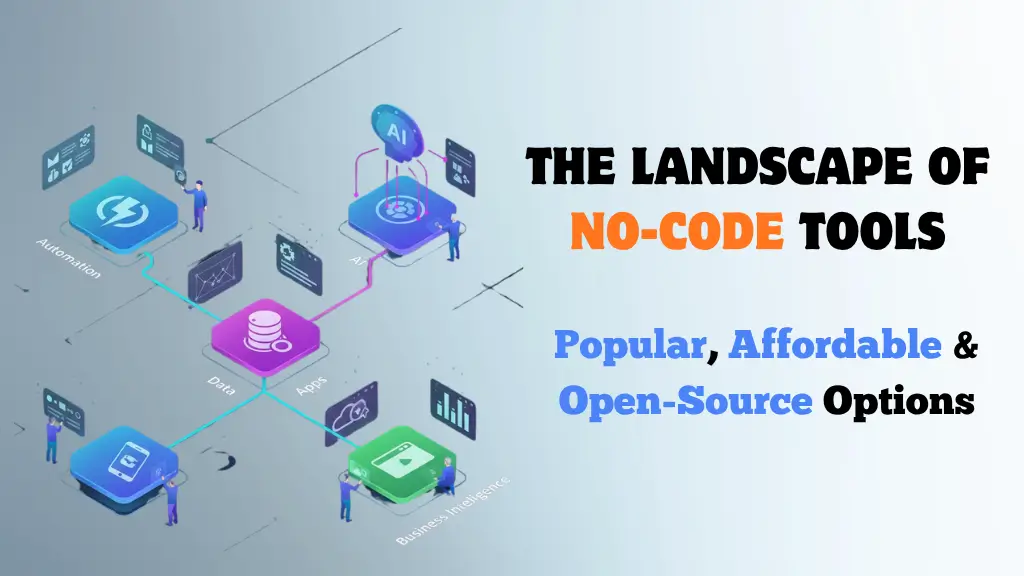
3) Low-code and no-code platforms reach enterprise maturity
Stat:
No-code and low-code tools are no longer just for niche projects. By 2026, the market is expected to be worth about $44.5 billion. More than half of companies already use these platforms for applications that help run their businesses, and adoption among large enterprises is moving beyond simple prototypes toward governed internal workflows and business applications.
Business impact:
When used in the right places, these tools reduce pressure on engineering teams. Internal requests move faster, backlogs shrink, and operations teams gain the ability to solve everyday problems on their own instead of waiting weeks for development cycles.
A planned step:
The key is structure. Create a clear playbook for citizen development that defines what can be built, how data can be accessed, and how these tools connect to your DevOps and security processes. Keep customer‑facing or highly scalable products in professional codebases, and use low‑code where speed and simplicity matter most.
4) Cloud‑native becomes the default architecture
Stat:
Cloud is no longer something teams are “moving to.” It’s where most software already lives. Global cloud spending crossed $750B in 2024 and keeps growing every year. Kubernetes has quietly become the standard way teams run modern systems, and new workloads are usually designed for the cloud from the start not adapted later.
Business impact:
When applications are cloud‑native, teams don’t fight infrastructure every time traffic spikes or something breaks. Scaling is easier, outages are less painful, and releases don’t feel risky. That usually means features ship faster and operations spend less time firefighting.
A planned step:
The mistake many teams make is letting every group solve cloud problems in their own way. Instead, pick a common Kubernetes setup, agree on how services talk to each other, and track delivery metrics alongside real costs. This keeps things fast without letting cloud spend drift out of control.
Use case:
One media company broke three large, hard‑to‑change systems into smaller container‑based services. Uptime improved from 98.5% to 99.95%, and release rollbacks dropped by half not because the code was perfect, but because deployments became simpler and safer.
5) Multi cloud with discipline (FinOps first)
Stat:
Cloud costs are climbing fast. IT software spending is still growing at double‑digit rates, and for many teams the biggest surprise is how quickly AI and GPU usage shows up on the bill. That’s why more than 60% of FinOps teams now track AI and GPU consumption separately instead of treating it like “just more compute.”
Business impact:
Teams that take FinOps seriously waste less money and make better decisions. They know which workloads are expensive, which vendors are competitive, and where performance or compliance really matters. That leads to fewer budget shocks, stronger negotiating power, and better control over latency and regional regulations.
A planned step:
Multi cloud only works when there’s one clear way to measure costs. Use the same cost‑allocation model across providers, set budgets that actually block runaway spend, and turn on alerts when usage looks abnormal. For AI‑heavy systems, pay special attention to GPU scheduling and route models intelligently instead of running everything at full power all the time.
Example
A healthcare provider reviewed its cloud usage and found many systems running 24/7 without needing to. By right‑sizing instances and automatically pausing non‑critical workloads, the team cut overall cloud spending by 22% without slowing down product development.
6) Edge computing expands rapidly
Stat:
There are well over 18 billion connected devices in use worldwide. Sensors, machines, vehicles, and cameras generate data constantly, and sending all of that back to a central cloud just doesn’t scale anymore. That pressure is why edge computing investment is climbing fast and is expected to cross $250B.
Business impact:
When teams move decision‑making closer to the device, things feel faster immediately. Latency drops, systems respond in real time, and bandwidth bills stop growing out of control. For many companies, edge processing also simplifies data‑residency and privacy rules because sensitive data doesn’t have to leave the site.
A planned step:
Edge environments can’t be treated like one‑off deployments. Use the same discipline you apply in the cloud standard gateways, automated updates, and clear rollback paths. Start with workloads that clearly benefit from proximity, such as predictive maintenance or on‑site analytics, before pushing business‑critical logic to the edge.
Use case:
A logistics company began processing sensor data directly at its warehouses instead of shipping everything to a central system. This let local teams react faster to traffic, weather, and loading delays. Over time, they cut fuel costs and improved delivery times without increasing load on their core backend.
7) Security‑by‑design replaces security‑by‑audit
Stat:
Security has moved from a background concern to a daily priority. More than half of software leaders now list it as their top worry, and nearly 6 out of 10 organizations say they’ve dealt with ransomware or a serious security incident recently. For most teams, security is no longer theoretical it’s personal.
Business impact:
Teams that build security in from the start spend far less time firefighting later. Breaches become rarer, fixes cost less, and audits stop feeling like emergency drills. Instead of slowing delivery, good security practices actually create more predictable releases and fewer last‑minute surprises.
A planned step:
Stop treating security as a final checkpoint. Bring it directly into your delivery pipeline. That means modeling threats early, generating SBOMs automatically, and scanning dependencies on every build. Between services, assume zero trust by default and be explicit about what is allowed to talk to what.
Example
A large retail platform added supply‑chain checks directly into its CI/CD workflow. Vulnerable or unverified dependencies were flagged before they ever reached production, helping the team catch risks early without slowing down their release schedule.
8) Compliance becomes product‑led (EU AI Act and beyond)
Stat:
Most companies admit they’re still figuring out AI, especially when it comes to regulation. At the same time, laws like the EU AI Act are no longer theoretical they’re real, detailed, and getting enforced. That gap is where a lot of teams start to feel nervous.
Business impact:
When compliance is handled early and thoughtfully, teams don’t slow down they actually move faster. Releases don’t get blocked at the last minute, legal reviews stop being scary, and audits turn into straightforward conversations instead of damage control.
A planned step:
The mindset shift is simple: stop treating compliance as something you “deal with later.” Build it into how the product works. Know which models you’re running, why you’re using them, what data they touch, and where human judgment still applies. If someone asks “why does the system do this?”, the answer should already exist inside your product not in someone’s memory.
9) Platform engineering consolidates tooling sprawl
Stat:
Agile is still the dominant way teams work, but in practice most companies aren’t “pure DevOps” anymore. As systems grow, many teams quietly move toward a hybrid setup where a platform team supports product teams instead of every team reinventing the same tools and pipelines.
Business impact:
When platform engineering is done right, developers spend less time fighting tooling and more time building features. Security becomes more consistent, onboarding gets easier, and the endless debates about “which tool should we use?” slowly disappear.
A planned step:
Rather than giving teams total freedom or locking everything down create a few well‑supported paths that just work. Make it easy to spin up a service, deploy safely, and get logs and metrics without thinking too hard. Developers should feel guided, not restricted.
Use case:
One B2B SaaS company noticed that every new service took weeks just to get production‑ready. By introducing shared service templates with security, logging, and deployment already wired in, teams went from weeks to hours without cutting corners or increasing risk.
10) Developer experience (DevEx) becomes a board‑level metric
Stat:
There are close to 20 million developers worldwide, and the way they work has changed for good. Remote or hybrid work is now normal, and developers are far more vocal about what slows them down slow laptops, messy environments, unclear processes, and tools that don’t work well together.
Business impact:
When developer experience is poor, teams feel it quickly. People take longer to ship, small changes drag on, and good engineers quietly start looking elsewhere. When it’s good, the opposite happens: onboarding is faster, delivery feels smoother, and developers can spend more time on problem solving and valuable product work instead of firefighting small frustrations every day.
The objective is not to replace developers, but to reduce repetitive work and give engineering teams more time for architecture, validation, security, and complex problem solving.
What smart teams are doing?
Instead of relying on surveys alone, teams are watching real signals. How long does a pull request wait for review? How often do tests fail for reasons no one understands? How much time is lost during incidents because there’s no clear playbook? Improving local setup speed, adding preview deployments, and writing simple runbooks often delivers more value than adding another tool.
11) Language choices become pragmatic, not ideological
Insight:
Teams have mostly stopped arguing about which language is “best.” That debate doesn’t move products forward anymore. Instead, companies are choosing languages based on what the work actually needs. Python shows up wherever AI or data is involved. JavaScript and TypeScript are still the obvious choice for anything user‑facing. Go and Rust are becoming popular when performance, concurrency, or system safety really start to matter.
Business impact:
This shift makes life easier across the board. Hiring becomes less painful because you’re not searching for unicorn skill sets. Systems tend to be more stable because each part is built with tools that fit the job. Teams spend less time wrestling with technology decisions and more time delivering features that customers actually care about.
What experienced teams do differently?
Good teams do not let this get out of hand. They set clear limits one or two languages per layer and stick to them. Even when different languages are used, everything works together because of clear APIs and shared contracts. That balance lets teams work freely where it helps, but it does not make a system that will be hard to understand or keep up with later.
12) Event‑driven and streaming architectures expand
Why it matters?
More and more systems need to react immediately. Waiting for a nightly job or even a five‑minute delay just isn’t acceptable anymore. Whether it’s stopping fraud, adjusting prices, or reacting to user behavior, being late often means losing money or trust. Streaming makes systems feel alive instead of sluggish.
Strategic move:
Teams that do this well stop thinking in terms of requests and start thinking in terms of events. Something happens, it gets recorded once, and multiple systems react to it in their own way. The key is discipline events must be clearly defined, consumers must handle retries safely, and schemas need to be treated like shared agreements, not “we’ll fix it later” JSON.
Use case:
One payments company moved fraud checks off batch jobs and into real‑time streams. Instead of reviewing transactions after the fact, patterns were spotted almost immediately. Chargebacks dropped noticeably, and customers stopped complaining about false declines caused by slow checks.
13) Data platforms evolve for AI readiness
Stat:
Most organizations are realizing that scattered spreadsheets, siloed databases, and one‑off datasets don’t work for AI. Teams are steadily moving toward governed data platforms that include vector stores, so AI systems can pull the right information at the right time instead of guessing.
Business impact:
When data is organized and trustworthy, AI outputs immediately improve. Answers become more accurate, hallucinations drop, and sensitive information is less likely to leak into places it shouldn’t. Just as important, compliance teams stop blocking releases because the data trail is finally clear.
Strategic move:
The practical path forward is consolidation. Bring structured and unstructured data together in a lake house or similar setup, layer in vector indexing for retrieval, and be strict about access controls and data quality checks. Don’t just ask “does it work?” track how often the AI gives the right answer and how often it misses, using precision and recall as real operating metrics.
14) The API economy and monetization matures
Insight:
APIs used to be something teams built quietly in the background. That’s no longer the case. Today, APIs are often the main way partners, customers, and even internal teams interact with a product. Companies that think “API‑first” usually ship integrations faster and unlock revenue earlier because they’re designing for reuse from day one.
Business impact:
When APIs are treated as products, they start creating real business value. Teams can charge based on usage, attract partners who build on top of them, and create ecosystems that are hard to replace. Over time, those integrations turn into long‑term relationships instead of one‑off connections.
Strategic move:
Stop treating APIs like internal plumbing. Decide what reliability, performance, and access really mean for your business, and document that clearly. Introduce pricing or limits that match how customers actually use the API. Just as important, make onboarding easy good docs, clear examples, and predictable behavior matter far more than clever architecture.
15) Observability evolves into AIOps
Why it matters?
If you’ve ever tried to debug a production issue in a modern system, you already know the problem. Logs are in one place, metrics in another, traces somewhere else and by the time you piece it together, the incident has already escalated. Systems have grown faster than our ability to reason about them manually.
Business impact:
Teams that move toward smarter observability spend less time firefighting. Issues are spotted earlier, root causes are clearer, and fixes happen faster. Over time, this leads to fewer major outages, shorter incident calls, and much healthier on‑call rotations. Engineers stay focused instead of constantly being pulled into emergency mode.
Strategic move:
Start by connecting the dots. Bring logs, metrics, traces, and events into a single view so teams aren’t guessing. Then use anomaly detection and SLO‑based alerts to highlight what actually matters. Once confidence grows, automate the obvious fixes like safe restarts or rollbacks so humans can step in only when judgment is needed.
16) Sustainability and Green Ops become CFO priorities
Stat:
Cloud and AI costs have forced finance teams to look deeper than monthly invoices. Today, most FinOps teams actively track GPU and AI usage, and many have started measuring environmental impact using standards like Software Carbon Intensity. Sustainability is no longer just a reporting topic it shows up in cost reviews.
Business impact:
When teams pay attention to how and when compute runs, they usually find waste they didn’t realize existed. The result is lower operating costs and fewer budget surprises. At the same time, clearer sustainability data strengthens ESG reporting and builds credibility with customers and investors who increasingly expect transparency.
Strategic move:
Do not see sustainability as a separate project; instead, make it a part of your daily engineering decisions. Plan heavy workloads for times when cleaner energy is available, avoid oversized idle clusters, and evaluate data centers and cloud regions based on the right balance of performance, cost, energy efficiency, and operational requirements. Keep an eye on both costs and carbon over time so you can see and make decisions about trade‑offs.
Example
A streaming company looked at how it used its GPUs and saw that most training jobs did not have to run right away. The team moved those jobs to off‑peak hours and areas that use less energy, which cut GPU costs by 18% and emissions by 12% without affecting delivery times.
17) Strategic outsourcing and co‑creation accelerate
Stat:
Outsourcing is still growing, but the reasons for it have changed. It is not just about saving money anymore. Many teams know they cannot do everything themselves because of more security concerns, compliance needs, and faster delivery times.
Business impact:
When teams outsource carefully, they can work faster without losing quality. Companies can get started faster, avoid long hiring processes, and bring in experience that would take years to build up on their own. Costs are also easier to predict, especially for big programs that last months or years.
Strategic move:
Stop thinking of partners as “extra developers.” Look for software engineering teams that can co-own outcomes, understand your architecture, and contribute to long-term technical decisions. The best partnerships feel like an extension of your own team people who understand your architecture, your security posture, and your long‑term goals. Agree early on how success is measured, share delivery metrics, and plan roadmaps together instead of handing work over in pieces.
Use case:
To build an internal developer platform, one bank chose this method. They did not hire someone else to do small jobs; instead, they worked with an engineering partner. The end result was a safe platform that over 200 developers could use with confidence. They could ship faster, with fewer problems, and without having to wait for approvals all the time.
18) Digital twins and Industry 4.0 become practical
Stat:
For a long time, digital twins sounded futuristic. Now they’re showing up in real operations. With edge computing, IoT sensors, and AI working together, companies can finally mirror factories, warehouses, and vehicle fleets in near real time not in theory, but in day‑to‑day use.
Business impact:
This changes how teams work on the ground. Instead of waiting for machines to fail or schedules to slip, teams can see problems forming early. Downtime drops, safety improves, and throughput gets better because decisions are based on live behavior, not assumptions or last month’s reports.
Strategic move:
The worst thing you can do is try to twin everything at once. Begin with something small and useful. Choose one or two assets that are very important to operations or too expensive to fix. Give them live sensor data, watch how they act, and use simulations to plan maintenance or test changes before you touch the real system. Once trust is built, it is much easier to grow.
19) Quantum remains long‑term, but post‑quantum security is immediate
Insight:
Quantum computing still feels distant for most businesses. Useful, large‑scale quantum systems aren’t something teams are deploying next year. But the security risk tied to quantum is already real. Data encrypted today could be stored and broken years later, which changes how organizations need to think about long‑term confidentiality right now.
Business impact:
This is less about innovation and more about protection. Companies that plan early are better prepared for future regulations, protect sensitive data over its full lifespan, and maintain trust with customers who expect their information to remain secure for decades not just the next release cycle.
Strategic move:
First, find out where cryptography is in your systems. Make a list of the algorithms, libraries, and protocols you use, especially those that are used in long‑lived data stores and external integrations. If you can, start adding post‑quantum options or abstraction layers that let you change algorithms later. The goal is not to move everything today; it is to make sure you will not have to make risky choices tomorrow.
20) Product analytics becomes embedded in the SDLC
Insight:
More teams are realizing that shipping code without measurement is basically shipping blind. Instead of treating analytics as a separate tool owned by “someone else,” feature flags, usage tracking, and small experiments are now wired directly into the release process. Teams want to know what happened right after something goes live not weeks later.
Business impact:
This changes how decisions get made. Teams stop debating opinions and start looking at behavior. Features that users ignore are caught early, good ideas get reinforced quickly, and roadmaps become clearer. Over time, this saves a lot of wasted effort and helps teams move faster with more confidence.
Strategic move:
Make it normal to ask, “How will we know this worked?” before any feature ships. Define one or two simple metrics, watch them closely after release, and talk about the results openly. If something isn’t getting used, fix it or let it go. The goal isn’t more dashboards, it’s better decisions based on what users actually do.
Conclusion
The future of software development isn’t about guessing the next trend or chasing every new tool. It’s about building systems and teams that can adapt when change inevitably shows up. The direction is already clear. Budgets are increasing where value is visible. AI is moving from experiments to everyday work. Cloud‑native approaches are no longer optional. And topics like security and sustainability are no longer technical concerns they’re leadership conversations. The companies that succeed in 2026 won’t be the ones doing everything. They’ll be the ones measuring the right things, standardizing what should be shared, and consistently delivering real value to customers instead of just shipping features. If you’re ready to turn these software development insights into a practical plan for the next 12 to 24 months, now is the right time to do it step by step, focused on impact, built to scale, and judged by outcomes that actually matter.