




The first time your editor auto-completed a full function, it probably felt like a magic trick. Today, that "magic" has become part of everyday development. AI coding partners now suggest design patterns, write test cases, generate API boilerplate, and even clean up legacy code while you're still reaching for your coffee. The future of coding isn’t something we're waiting for, it's happening right inside the tools we already use. Software now drives almost every business decision, product experience, and user interaction. all Companies can’t afford slow releases or mediocre quality anymore. Faster shipping, fewer bugs, and constant innovation are no longer "nice to have"—they’re survival metrics. And AI promises exactly that.
But it also changes the nature of engineering work. Developers are moving away from typing every line manually and toward orchestrating systems, supervising AI outputs, making architectural calls, and solving complex problems humans are uniquely good at. In this blog article , we’ll break down how AI coding assistants and AI-generated code are reshaping everyday developer workflows. You’ll see how the engineer’s role is evolving, how AI impacts testing and quality, where it helps—and where it can cause trouble. We’ll also touch on ethical and security concerns, and share practical steps teams can take to adapt with confidence.
The future of coding, today — from autocomplete to autonomous collaborators
A few years ago, autocomplete felt like a breakthrough. Now, we’ve moved so far beyond simple suggestions that it almost feels strange to code without an AI partner. Modern AI tools are quietly reshaping the entire software development lifecycle from the moment you sketch an idea to the moment your code goes live.
1. From autocomplete to true co-creation
Tools like GitHub Copilot, Amazon Code Whisperer, and Code i um don’t just finish your sentences anymore. They generate full functions, understand framework conventions, and offer patterns that look like they came straight from a senior engineer. Instead of jumping between docs, Stack Overflow, and examples, developers simply choose the best suggestion and refine it.
2. Designing software through conversation
ChatGPT and similar AI assistants now help teams think through system design, draft architecture documents, outline user stories, and even build project scaffolds—just through natural dialogue. It’s like whiteboarding with someone who has read every framework guide, API manual, and design pattern book ever written.
3. AI pair programmers inside your IDE
Tools like Replit Ghostwriter, JetBrains AI, and VS Code extensions act like a helpful colleague sitting beside you. They keep track of context across files, generate missing test cases, spot errors early, and explain confusing legacy code. Instead of stopping your flow to “figure something out,” you ask—and move on.
4. Agentic workflows are already here
We’re at the early stages of AI agents that can take action, not just write code. These agents can trigger builds, run tests, fix linting issues, push branches, create PRs, and even open Jira or GitHub issues with suggested resolutions—all from a natural-language prompt. It’s a glimpse of what fully autonomous development might become.
The shift in the role of engineers in the ai era
The role of software engineers is changing faster than at any point in the last decade. We’re moving from “people who type code” to “people who shape systems.” AI isn’t replacing engineers—it’s reshaping what engineering actually means.
Problem framing matters more than perfect syntax
Instead of hand-writing every function, engineers now spend more time defining the problem clearly: the constraints, the acceptance criteria, the edge cases, the performance expectations. Once that thinking is solid, AI can handle the first draft, the boilerplate, or even entire modules.
Architecture and orchestration are still human jobs
Deciding how things fit together—services, patterns, interfaces, data flows—still requires human judgment. Engineers are now architects of “human + AI collaboration,” choosing what to automate, what to write manually, and how to build guardrails around AI-generated work.
Supervising models is the new code review
AI can generate a lot of code quickly, but it still needs a careful human to validate it. Engineers increasingly act as reviewers and supervisors:
- Is the logic correct?
- Is it efficient?
- Is it secure?
- Is it maintainable six months from now?
AI can generate solutions, but only engineers can guarantee trustworthiness.
Engineers as curators of context and domain knowledge
AI performs dramatically better when it understands the domain. This means engineers now maintain project context—documentation, naming conventions, domain concepts, examples, and constraints. In many ways, they serve as librarians for the system’s knowledge base.
Continuous evaluation becomes a core skill
Modern teams don’t just “use AI”—they measure its impact. They watch:
- Are defect rates changing?
- Are PRs shipping faster?
- Is cycle time improving?
- Are we spending more time on problem-solving instead of repetitive tasks?
Engineers are becoming analysts of their own workflow, using data to refine how AI fits into the development process.
Ai tools in the developer workflow — practical uses that already work
AI isn’t here to replace great engineering—it’s here to take the repetitive, mechanical parts off your plate so you can focus on the work that actually moves the product forward. And the best part? Many of these workflows are already mature, stable, and used in production by teams of all sizes.
Here’s how engineering teams are using AI right now to ship faster and smarter:
From Requirements → Project Scaffolds (in minutes, not days)
Give an AI assistant a user story or acceptance criteria and it can generate:
- Folder structure
- API endpoints and DTOs
- Initial screens with routing
- State management setup
In mobile dev, it can spin up Flutter, React Native, or Kotlin Compose screens that are almost ready to plug into your backend. Engineers still refine the details, but the blank screen problem disappears.
Refactoring and Migration Without the Fear
Refactoring legacy code is painful. AI makes it safer by suggesting:
- Cleaner abstractions
- Breaking up large classes
- Converting old patterns to modern ones
- Updating deprecated APIs
Teams using Kotlin Multiplatform, SwiftUI, Jetpack Compose, or .NET MAUI love this—AI can generate interoperability
Code Review Helpers
AI isn't going to take the place of code reviewers; it's more like an extra pair of eyes that never gets tired. The AI points out the things that are easy to miss while you think about architecture, design choices, and how easy it will be to keep things up to date in the future. Patterns that are risky and might break under pressure
- Problems with hidden null pointers
- Loops that don't work well or logic that is repeated
- Conditions that are too complicated and need to be fixed
- Error handling paths you might’ve forgotten
It's like having a teammate who quietly points out possible problems before they turn into bugs, which gives human reviewers more time to focus on what's important.
Security checks that happen right away
Shift-left security is no longer just a buzzword thanks to AI-powered security tools. AI finds weaknesses in your code as soon as they appear, so you don't have to wait for a pen test or a production incident.
- Risks of SQL injection
- Hashing and encryption that aren't strong or up to date
- Dependencies that are out of date or weak
- Secrets that are hard-coded into the repo
- Problems with authentication or access control logic
AI doesn't just give you warnings; it gives you stack-specific fixes, like showing you the exact MongoDB or Express.js code you need to use. With less back-and-forth, developers can write code faster and more safely.
DevOps, pipelines, and automation on autopilot
You can now explain your deployment process in simple terms, and AI will make:
- Workflows for GitHub Actions
- YAML configs for Azure DevOps
- Docker files
- Kubernetes manifests
- Templates for infrastructure as code
Some AI agents even watch for flaky tests or broken pipelines and automatically open pull requests with suggested fixes. It's like having a junior DevOps engineer clean up your CI/CD while you sleep.
Documentation that will always be useful
Let's be honest: developers don't like writing documentation, and even when they do, it doesn't last long. AI completely changes that.
- Make comments into full documentation
- Make diagrams of clean architecture
- Clarify old modules that are hard to understand
- Explain why a system acts the way it does.
- Make onboarding documents that are specific to your repo.
This way, your tribal knowledge stays in the system instead of being stuck in one engineer's head.
Mobile developers can get a lot more done.
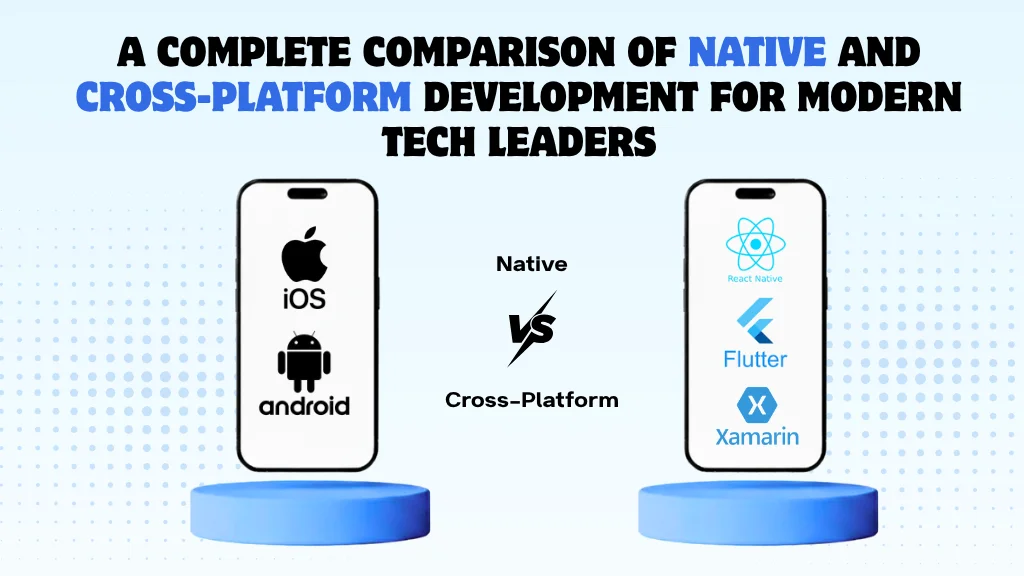
Mobile teams often have to find the right balance between working on native apps and cross-platform apps. AI is now helping to close that gap.
- Give fixes that are specific to iOS or Android
- Suggest the best ways to use Flutter or React Native
- Make sure UI patterns are the same on all platforms
- Find inconsistencies in spot navigation or themes
- Give tips on how to improve based on the framework
Developers get builds that are cleaner and more stable, and product teams get things done faster. It's not surprising that a lot of mobile teams now look at frameworks in part based on how well they work with AI tools.
Tests That Write Themselves
Test coverage is no longer a bottleneck. Tools like Diff blue Cover and built-in AI test generators can:
- Create unit tests
- Generate mocks and stubs
- Write property-based tests
- Suggest edge cases you might miss
- This means developers focus on logic and architecture, while AI handles the repetitive testing scaffolding.
Quality, testing, and productivity — what the data and real teams are seeing
As AI becomes part of the everyday developer workflow, we finally have enough data—and enough real-world usage—to understand what’s actually happening inside engineering teams. The results? Noticeable gains, but only when AI is used thoughtfully and paired with strong engineering practices.
Productivity: Real Numbers, Real Impact
Multiple controlled studies in the past few years show consistent productivity boosts when developers use AI coding assistants. Most reports fall in the 30–55% faster task completion range for specific tasks like writing boilerplate, generating tests, or handling refactors. But the numbers only tell part of the story. Developers also report:
- Less context switching
- Longer, smoother flow states
- Reduced cognitive load for repetitive tasks
- Faster onboarding, especially for large codebases
- The net effect? Teams ship more with less friction—and engineers can spend more time on design, architecture, and problem-solving instead of plumbing.
Quality: Catching Bugs Before They Bite
AI isn’t magic, but it excels at the kind of careful, detail-oriented checking that humans tend to skip when deadlines loom. Teams adopting AI into their testing and code review workflows are seeing:
- Higher test coverage (because tests are no longer painful to write)
- Earlier detection of regressions
- Better edge-case handling
- Cleaner, more predictable codebases
AI is especially effective at the boring but important parts of QA: null checks, error paths, missing validations, and dependency risks. Used correctly, it becomes a safety net that strengthens—not weakens—engineering discipline.
Reliability: Healthier Pipelines, Fewer Surprises
Flaky tests and failing CI pipelines are some of the biggest drains on team energy. AI helps here, too.
- Scan failure logs and identify flaky patterns
- Recommend more deterministic test structures
- Suggest improvements to async handling
- Reduce mean time to restore (MTTR) after build failures
For teams with large codebases and complex CI/CD pipelines, this translates into fewer broken builds and faster, cleaner releases.
Frameworks and Platforms: Productivity Is the New Differentiator
Cross-platform frameworks like Flutter and React Native continue to surge in adoption—but the next competitive edge won’t be fast on iOS and Android.
- How well the framework works with AI assistants
- How easily AI can generate components, screens, tests, and integrations
- How quickly teams can iterate using AI-enhanced workflows
In other words, the future of “best framework” isn’t just about performance benchmarks it’s about AI-enabled development speed across the entire stack.
Ethical, security & skill challenges — the real risks behind ai-assisted coding
AI is incredible. It speeds you up, removes boring work, catches mistakes, and sometimes writes a draft you didn’t even know you needed. But with that power comes a new set of risks—many subtle, many easy to overlook. These risks don’t mean you should avoid AI. They mean you should use it with consciousness, discipline, and engineering maturity.
Overreliance and Hallucinations: When AI Sounds Sure but Is Wrong
All developers have seen this: AI makes code that looks neat, well-organized, and elegant, but when you run it, it crashes. It sometimes:
- Invents API methods that never existed
- Brings up old patterns
- Doesn't cover a performance edge case
- Produces logic that "feels right" but breaks silently
Why this is important?
AI is trained to guess what text is likely to come next, not what is always right. If engineers start to trust suggestions without question, it will be harder to find bugs and easier to ship.
How to keep yourself safe?
- Treat AI suggestions like the work of a junior developer: they look good, but they need to be checked by a senior developer.
- Add tests to make sure the logic made by AI is correct.
- Make sure that anything important to the mission is peer-reviewed.
- Urge developers to ask, "Why did it make this?"
- AI is smart, but you still need to use your own judgment.
Licensing and IP Risks: The Issue No One Talks About
AI models learn from millions of repositories. Some are okay with it. Some are limiting. A generated snippet could look like code that is licensed under the GPL or logic that is copyrighted.
Why this is important?
You can't risk putting code in commercial software that breaks licensing rules if you're shipping it.
How to keep yourself safe?
- Use business tools that filter licenses
- Add scanning for code provenance
- Write down important AI-generated blocks
- A small mistake in licensing today can turn into a big legal problem tomorrow.
Sensitive Data Leakage: A Risk That Isn't Loud but Is Serious
This is a very common problem: Developers can copy and paste logs, error messages, API keys, customer data, stack traces, and even architecture diagrams right into an AI tool.
Why this is important?
You could accidentally leak private information if the AI system saves prompts or uses them to train itself in the future.
How to keep yourself safe?
- Use AI models that are private and only for your organization.
- Before pasting anything, take off the secrets and emails.
- Put DLP (Data Loss Prevention) rules on your AI platform.
- Teach teams not to get into the habit of "just pasting everything."
- The rule is easy: Don't put something in an AI model if you wouldn't put it on GitHub.
The rule is easy: Don't put something in an AI model if you wouldn't put it on GitHub.
Security Drift: When AI Makes Things Worse Instead of Better
Sometimes AI reproduces patterns that are “common” but insecure, such as:
- Strings of raw SQL
- Weak cryptographic functions
- Checks for missing permission
- Unsafe regex patterns
- Access to the file system directly
Why this is important?
A single insecure suggestion can make a weakness that stays hidden for months.
How to keep yourself safe?
- Use AI with SAST and DAST tools.
- Include automated secret scanning
- Make sure that code made by AI goes through a normal security check.
- Teach the AI how to follow your secure coding rules
- Code that runs quickly is great. Better code is safe code.
Skill Atrophy: When Engineers Start to Forget the Basics
This is a less serious risk, but it is still very real. If AI writes boilerplate, makes tests, writes configs, structures files, and suggests patterns, young engineers might never learn why things work. Over time, teams may experience:
- Debugging instincts that aren't as strong
- Not as sure when AI isn't there
- It's hard to understand architecture beyond what the AI suggests.
- Too much trust in generated solutions
Why this is important?
Companies still need engineers who can think deeply about outages, performance problems, and complicated system design.
How to keep yourself safe?
- Make code reviews a chance to learn
- Encourage engineers to work "without AI" every now and then
- Give people deep dives into core modules
- Host sessions for architecture walkthroughs and problem-solving
- AI should make you better at what you do, not take it away.
Bias & Fairness—Concealed in the Training Data
AI models frequently adopt the biases present in their training datasets. This can have an impact on:
- Suggestions
- Decisions based on ML
- Patterns for controlling access
- Logic for moderating content
- Dividing users into groups
What this means?
Bias can cause people to be treated unfairly, make people unhappy, or even get in trouble with the law, especially in hiring, finance, or healthcare.
How to keep yourself safe?
- Check ML-driven features by hand
- Add tests for fairness and safety.
- Check how AI-generated logic works with different groups of users.
- Keep human ownership of sensitive decision-making
- Ethics is not something you can choose to do without. Now it's a part of engineering. If you want, I can also format the next section or convert this into CK Editor-compatible HTML, blog-ready markdown, or SEO-formatted content.
Conclusion
The future of coding isn't about getting rid of engineers; it's about making them better. AI in software development takes teams from building things by hand to using models to guide their work, from doing the same thing over and over to solving problems at the system level, and from working alone to working together to speed things up. Engineers who will do well are those who can clearly define problems, organize data and context, manage AI models, and use these tools with purpose and discipline.