




Picture this: a Houston healthcare startup with seed funding and a three-quarter roadmap needs to make a call build an engineering team in-house or partner externally to ship faster. A few hours north in Dallas, an enterprise company faces the same question while trying to modernize systems that have been held together with duct tape for years. And in Austin, where Big Tech and high-growth startups are constantly poaching the same talent pool, the stakes are even higher because every month you spend hiring is a month your competitor is shipping.
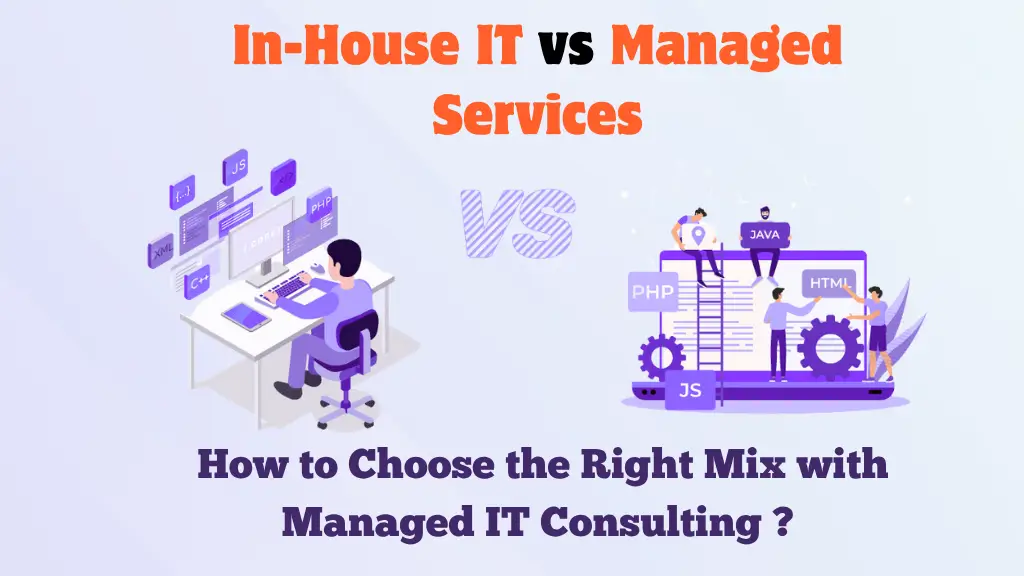
This is the outsourcing vs. in-house development dilemma, and it's one of the most consequential decisions a growing Texas company can make. In this guide, we'll cut through the noise. We'll define both models clearly, compare them across the factors that actually matter cost, scalability, speed, expertise, control, and risk and get specific about what the Texas market looks like in 2026. We'll cover the scenarios where each approach wins, walk through hybrid options like staff augmentation, and give you a practical framework you can use to make the call for your specific situation. We'll also show you how to estimate costs against your actual roadmap, not just generic benchmarks. One thing upfront: there's no universally right answer here. The best model depends on how strategically critical your product is, what your compliance requirements look like, how much runway you're working with, and honestly how well you can manage a distributed team. All of that shapes the decision more than any general rule of thumb ever could.
The Two Models, Explained Simply
At its core, this decision comes down to one question: who's actually building your software, and what's your relationship with them?
In-house development
You hire full-time engineers, QA specialists, DevOps engineers, and product managers who work inside your company. They're on your systems, embedded in your culture, sitting in your Slack channels. Over time, they build deep knowledge of your product the kind that's hard to replicate when you're working with an outside team. It's slower to spin up, but when it works, it really works.
Outsourcing
You partner with an external team or contractors to deliver specific outcomes. That can look a lot different ways a fixed-scope project, a managed service with defined SLAs, or a dedicated development team that essentially functions as a remote extension of your org. Location-wise, you've got options: onshore (U.S.-based), nearshore (Latin America is popular for Texas companies thanks to time zone overlap), or offshore (Eastern Europe, India, and others). Each comes with its own cost and communication trade‑offs.
What about the middle ground?
Hybrid models staff augmentation, blended teams are worth knowing about because they don't force you into an either/or choice. The typical setup: your internal team owns strategy and product direction, while external specialists handle execution, fill skill gaps, or help you scale capacity during a crunch. You keep control without having to hire for every need.
The Texas Reality Check: Talent, Salaries, and Time-to-Hire
Texas isn't one tech market it's several, each with its own flavor. Austin has the dense startup ecosystem and the Big Tech presence. Dallas‑Fort Worth anchors telecom, logistics, and financial services. Houston owns energy, healthcare, and industrial software. That industry concentration creates real opportunity, but it also means you're competing hard for the same pool of engineers everyone else wants.
Hiring is genuinely competitive
Austin consistently ranks among the top U.S. metros for tech job postings per capita. With major tech employers and well‑funded startups all fishing in the same pond, salaries especially for senior full‑stack, mobile, data, and DevOps engineers keep climbing. If you're budgeting based on numbers from two or three years ago, you're probably off.
What engineers are actually making in Texas (2025 estimates)?
- Mid‑level software engineer: $110k–$135k base
- Senior software engineer: $140k–$170k base (Austin skews toward the top)
- QA/Test engineer: $85k–$110k base
- DevOps/SRE: $125k–$160k base
- Engineering manager: $160k–$200k base
And that's just the base salary. Stack on benefits, payroll taxes, equity, and training, and your true cost per hire runs 20–30% higher than the number on the offer letter.
The time problem nobody talks about enough
Hiring a senior engineer in Texas takes 6–12 weeks on a good day often longer. Then factor in onboarding: getting someone up to speed on your tech stack, your domain, and how your team actually works takes another 2–4 months before they're fully productive. That's potentially six months before a new hire is genuinely contributing at full capacity. Outsourced teams, by comparison, can typically be up and running in 2–6 weeks. For companies with tight timelines, that gap matters a lot.
Cost and ROI: What a Real Comparison Actually Looks Like?
Let's put some real numbers on this. The figures below are based on a typical five‑person team three engineers, one QA, one DevOps. They're directional estimates, not guarantees, but they'll give you a grounded starting point.
In‑House Team (Texas)
Base salaries annually:
- 1 Senior engineer: $155k
- 2 Mid‑level engineers: $125k each = $250k
- 1 QA engineer: $95k
- 1 DevOps engineer: $140k
- Subtotal: $640k
Add the costs people often underestimate:
- Employer burden (benefits, payroll taxes, tools, training): ~$160k
- Recruitment (partial agency hiring): ~$60k one‑time
- Equipment, licenses, onboarding: ~$20k in year one
First‑year total: ~$880k. Ongoing annual cost: ~$800k.
Outsourcing (Blended FTE Capacity)
- Onshore (U.S./Texas): $120–$170/hour → ~$1.39M–$1.5M/year for 5 FTEs
- Nearshore (Latin America): $45–$85/hour → ~$624k/year for 5 FTEs
- Offshore (Eastern Europe/India): $30–$55/hour → ~$432k/year for 5 FTEs
For complex engagements, add another 5–10% for vendor management, legal, and coordination overhead.
What the numbers are actually telling you?
Onshore outsourcing often runs higher than building in‑house but you're paying for speed and reduced hiring friction. If you're working on something urgent, regulated, or high‑stakes, that trade‑off can be completely worth it.
Nearshore typically lands 20–35% cheaper than a Texas in‑house team, and time zone overlap with Latin America makes day‑to‑day collaboration feel much closer to working with a local team than most people expect.
Offshore can cut costs by 35–50% or more. But that savings comes with real requirements stronger governance, tighter processes, and clear communication standards. Without those in place, the savings have a way of disappearing into delays and rework.
Speed, Scalability, and Expertise: Why So Many Companies End Up Blending Both?
Cost matters, but for most companies making this decision, speed and scalability are what actually drive the call.
Getting started fast
Outsourced teams can be operational within weeks. For a startup sprinting toward an MVP, an enterprise mid-transformation, or a company building a new mobile application, that kind of speed can be a major advantage. The strategic benefits of outsourcing mobile app development can include faster access to specialized mobile expertise, shorter ramp-up time, flexible development capacity, and reduced hiring overhead compared with building an entire mobile team in-house.
Scaling without the chaos
A dedicated external team gives you something in‑house hiring really can't: elastic capacity. Need to ramp up for a big sprint? Done. Need to scale back after launch? No layoffs, no awkward conversations, no severance. You adjust by sprint or by quarter, and the team flexes with you.
Access to skills you can't easily hire for locally
This one's underrated. If you need an LLM engineer, a SOC 2‑ready DevOps specialist, or a Kotlin Multiplatform developer for a three‑month engagement, finding that person in Texas and convincing them to join a company full‑time is a real challenge. Outsourcing gives you immediate access to niche expertise without the six‑month hiring process.
What in‑house still does better?
Deep domain knowledge. Long‑term stakeholder relationships. The kind of institutional understanding that takes years to build and is genuinely hard to replicate with external teams. For complex, ongoing products in healthcare, energy, or logistics where context is everything that depth is worth a lot.
The practical takeaway
Think of your sourcing strategy as a dial, not a switch. Use external partners for short‑term capacity spikes and specialized skills. Build internal teams around the domain‑intensive work that compounds over time. And if you're a Texas company working with distributed teams, nearshore partners particularly in Latin America tend to hit the sweet spot of collaboration, cost, and speed better than most other options.
Control, Security, and Risk: What You're Actually Signing Up For?
This is where industry context really starts to matter. A SaaS startup and a Houston healthcare company have very different risk tolerances and that should shape this decision as much as cost or speed does.
Where in‑house genuinely wins?
When your product touches sensitive IP, proprietary algorithms, clinical workflows, or pricing models, keeping development in‑house gives you a level of control that's hard to replicate externally. Your team works on your systems, under your security policies, with incentives aligned to your outcomes. For long‑term, strategically critical products, that alignment compounds over time in ways that are genuinely valuable.
The real risks of outsourcing and how to manage them?
Vendor dependency is the one that sneaks up on companies. If your partner disappears or the relationship sours, you need to be able to keep moving. Protect yourself upfront: strong SLAs, clear exit clauses, and mandatory knowledge transfer runbooks, architecture diagrams, and decision records baked into the contract from day one. Quality variability is real too, but it's manageable. Shared repositories, mandatory code reviews, automated testing pipelines, and a pilot sprint before you scale the engagement go a long way toward keeping standards where they need to be. Security and compliance deserve special attention, especially in Texas industries like healthcare, energy, and finance. Require SOC 2 or ISO 27001 certification, background checks, and least‑privilege access controls as non‑negotiables. For anything touching regulated data or strict residency requirements, onshore or nearshore partners are usually the safer bet over offshore.
Onshore vs. Nearshore vs. Offshore the honest breakdown
Onshore gives you maximum control, compliance alignment, and collaboration. You'll pay for it. Offshore cuts costs significantly but demands strong governance, clear communication standards, and real patience with time‑zone friction. Nearshore sits in the middle, with competitive pricing and enough time‑zone overlap to make real‑time collaboration actually work. For most Texas companies, that balance is hard to argue with.
Hybrid Approaches That Actually Work in Texas
For most companies, the real answer isn't a clean either/or it's a blend. Keep control where it matters most, bring in outside help where speed and flexibility matter more. Here's what that looks like in practice:
- Staff augmentation: You bring in vetted senior engineers who slot directly into your existing workflows, tools, and ceremonies. They're not outsourcing a project it's filling a specific skill gap without the overhead of a full‑time hire or a long‑term commitment. Works well when you know exactly what you need and just need someone good, fast.
- Dedicated nearshore squads: This is less "vendor relationship" and more "extended team." A dedicated squad shares your roadmap, your communication channels, your standups. They're not waiting on a ticket queue they're building alongside you. For ongoing product development where demand fluctuates quarter to quarter, this model gives you the flexibility to scale without the constant friction of hiring and off‑boarding.
- The core-and-contour model: This one's worth knowing by name. The idea is simple: keep your core IP and mission‑critical systems in‑house, where you have full control and deep context. Then outsource the "contour" work UI updates, third‑party integrations, testing, data engineering to external partners who can move quickly without needing to understand every corner of your product. You protect what matters most and stop bottlenecking everything else in internal capacity.
Sourcing Mistakes That Cost More Than They Save
Most sourcing decisions don't go wrong because someone picked the wrong model. They go wrong because of a handful of avoidable mistakes made along the way.
Chasing the lowest hourly rate
It's tempting. It's also usually a trap. Low rates have a way of hiding the real costs rework, missed deadlines, communication breakdowns that eat hours nobody budgeted for. The number that actually matters is total cost of ownership, plus the cost of delay. A cheaper vendor who ships six weeks late isn't cheaper.
Locking in a vendor before you've tested them
Before committing to a long-term engagement, define a clear software project scope with expected outcomes, deliverables, responsibilities, acceptance criteria, and constraints. Define exit clauses upfront and enforce documentation standards from day one. Hope is not a vendor management strategy.
Underestimating how much management it takes
Even great external teams need strong product ownership, clear priorities, and consistent feedback to do their best work. If your internal team is too stretched to manage the relationship properly, the output will reflect that. Budget time for this it's not optional.
Treating your in-house team like a fixed asset
Internal teams need ongoing investment to stay effective. Training, mentoring, process improvements without those, velocity quietly erodes and you don't notice until it's already a problem.
Bolting on security as an afterthought
Whether you're building in-house or outsourcing, security needs to be baked in from the start. Threat modeling, DAST/SAST tooling, audit trails these aren't things you add at the end of the project. By then, it's always more expensive and more painful than it needed to be.
Skipping knowledge transfer
This one bites companies hardest when a key person leaves or a vendor engagement ends. Require architecture decision records, diagrams, onboarding guides, and regular knowledge-sharing practices tech talks, documentation sprints as part of how the team operates, not as a last-minute scramble.
Conclusion
In-house development gives you maximum control and deep domain expertise and for your core IP, that's often worth every dollar. Outsourcing gives you speed, scalability, and access to specialized talent without the six-month hiring cycle which matters a lot in a market like Texas, where you're competing with everyone from scrappy startups to Fortune 500s for the same engineers. For most companies, the answer ends up being hybrid: keep the strategic stuff in-house, lean on partners for speed and flexibility everywhere else.
But start with outcomes, not models. Ask yourself: what's the actual value of shipping three months earlier? Which features are genuinely differentiating, and which are just table stakes? What level of compliance and data control does your industry require? Answer those questions honestly, and the right approach tends to become pretty obvious. If you want help working through that analysis, a Texas-focused cost and sourcing review can take a lot of the guesswork out of it comparing timelines, risks, and ROI across in-house, outsourced, and hybrid options so you can make the call with real numbers behind it, not just gut feel.